
The Science Behind Infrared Cooking
To understand why the Ruby Pro-Sear series represents such a significant advancement in outdoor cooking technology, it helps to understand the fundamental physics of heat transfer. There are three mechanisms by which heat moves from a source to food: conduction (direct contact), convection (hot air movement), and radiation (electromagnetic energy transfer).
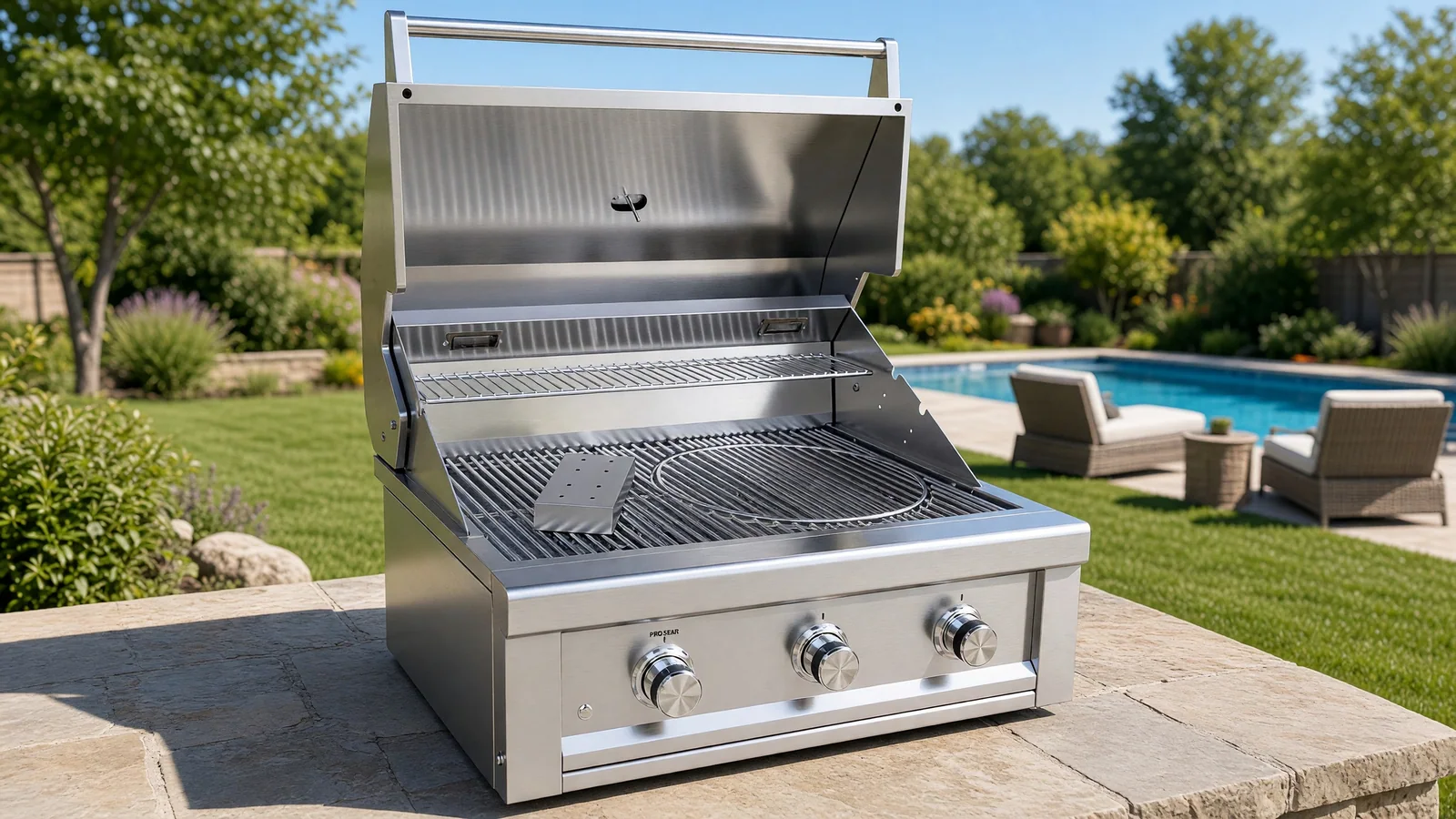
Traditional gas grills rely primarily on convection — the burners heat the air inside the grill, and that hot air cooks the food. This is effective but has significant limitations. Hot air is relatively inefficient at transferring heat to food surfaces, which is why conventional grills often struggle to achieve the extreme surface temperatures needed for a proper sear. Additionally, the moving air tends to dry out food surfaces, which is why grilled food can sometimes taste drier than food cooked by other methods.
Infrared grills work on a completely different principle. The burner heats a ceramic or stainless steel emitter plate to extreme temperatures, and that plate radiates infrared energy directly at the food. This radiant heat transfer is far more efficient than convection, allowing infrared grills to achieve surface temperatures of 1,000-1,500°F — temperatures that are simply not achievable with conventional gas grills.
The Maillard Reaction: The Key to Great Flavor
The reason extreme surface temperatures matter so much in cooking comes down to a chemical reaction called the Maillard reaction. Named after French chemist Louis-Camille Maillard, who first described it in 1912, this reaction occurs when amino acids and reducing sugars are exposed to high heat (above approximately 280°F). The reaction produces hundreds of different flavor compounds that create the complex, savory flavors we associate with properly seared meat.
The Maillard reaction is what creates the brown crust on a perfectly seared steak, the golden exterior of a roasted chicken, and the caramelized surface of a grilled vegetable. Without sufficient surface temperature, this reaction doesn't occur, and food tastes flat and one-dimensional by comparison.
Infrared grills achieve the Maillard reaction almost instantaneously, creating a proper sear in 30-60 seconds per side rather than the 3-5 minutes required on a conventional gas grill. This speed has a crucial advantage: the interior of the meat has less time to overcook while the exterior is being seared, resulting in a more even doneness gradient from edge to center.
Ruby Series Models: Finding Your Perfect Match
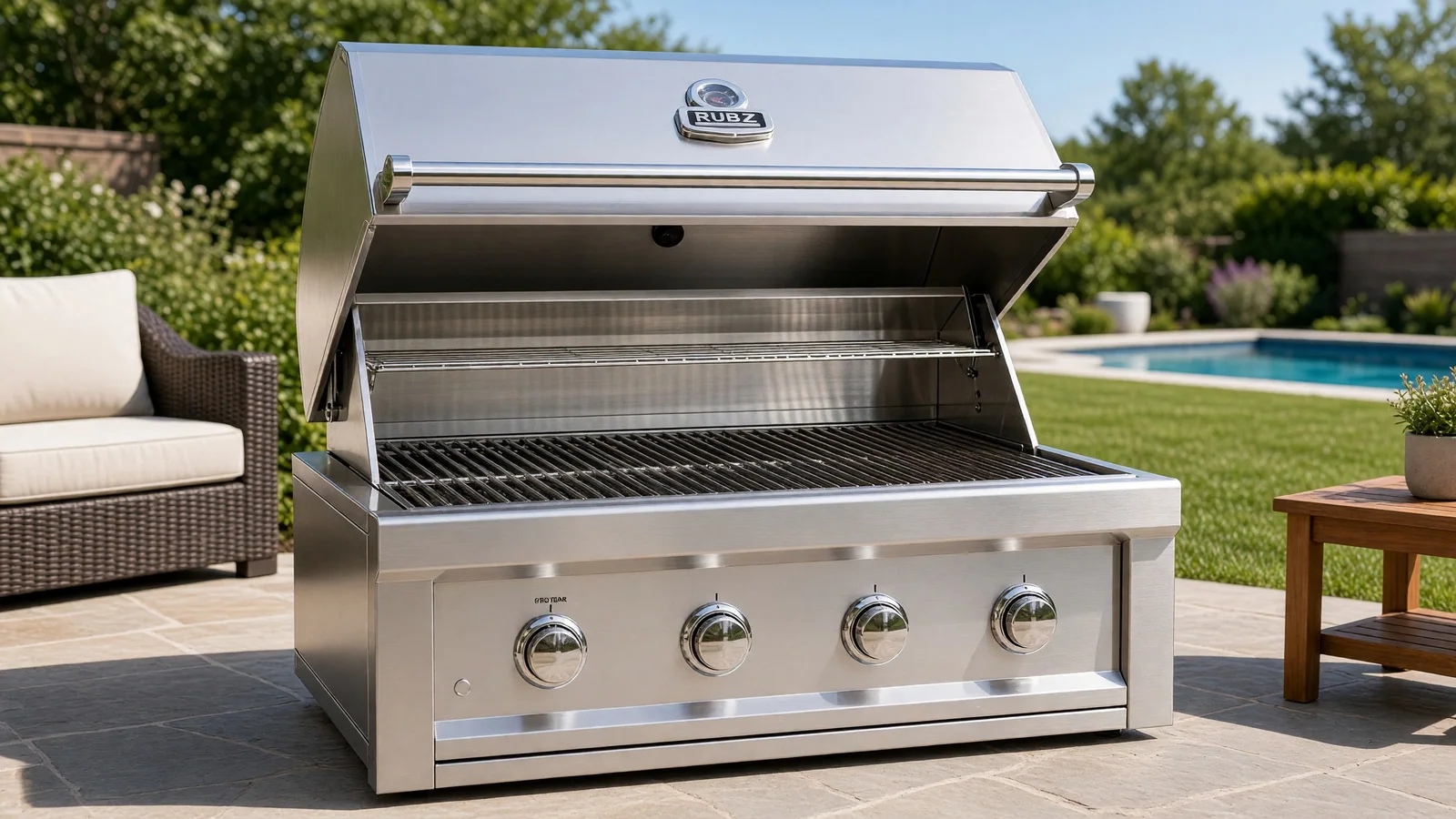
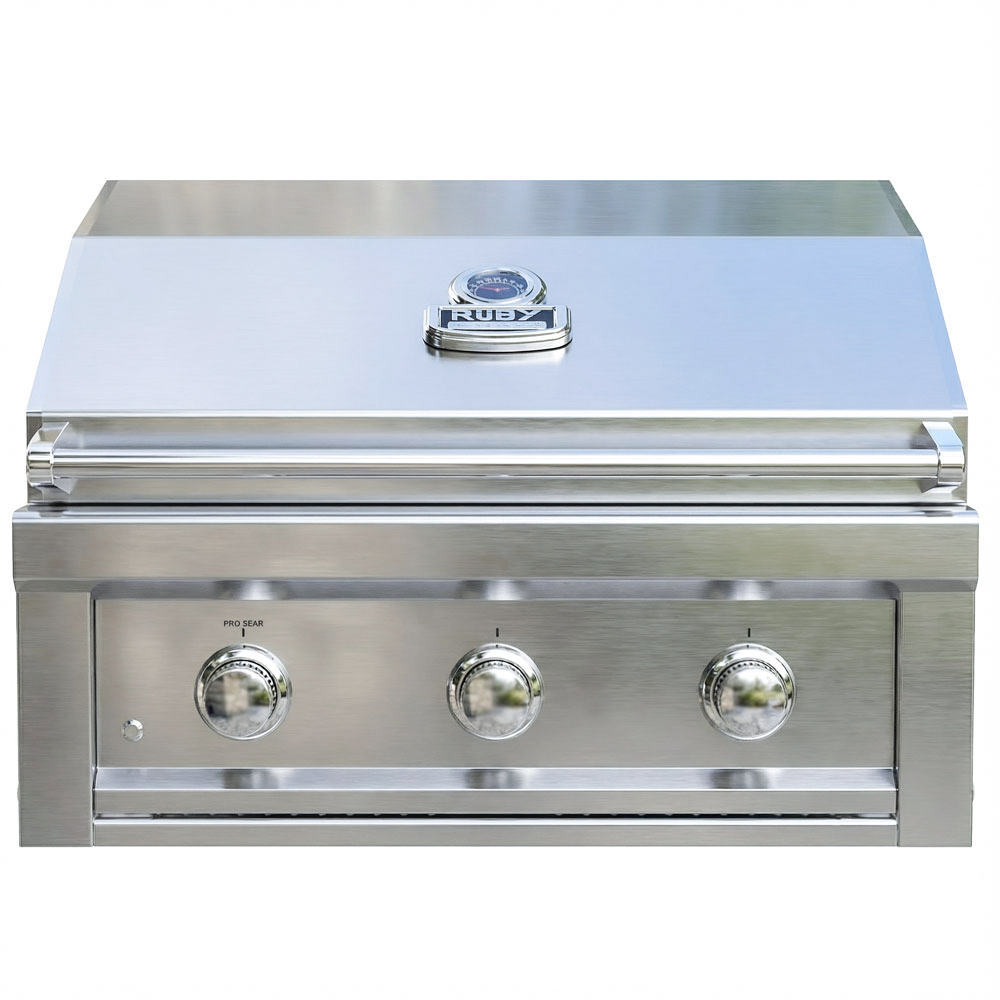 30" Ruby 3-Burner Pro-Sear30" cut-out · 540 sq in · 60,000 BTU
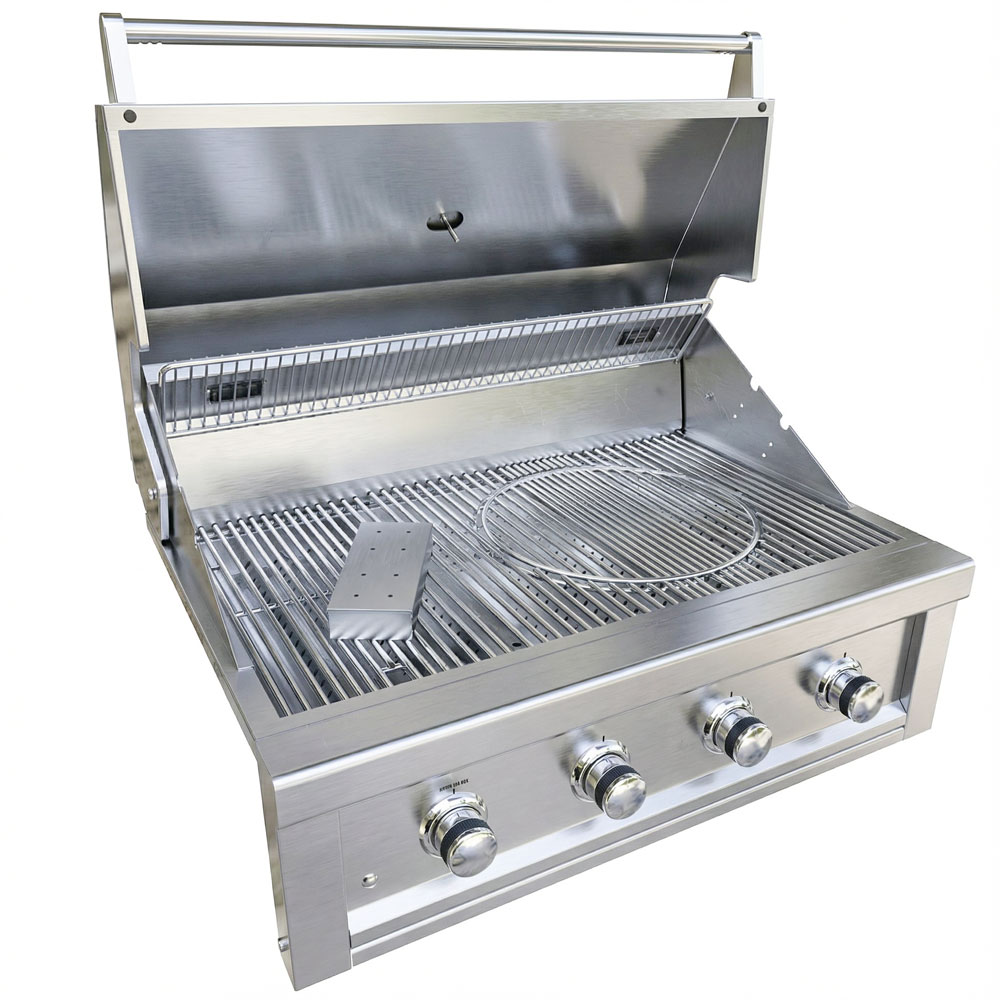 36" Ruby 4-Burner Pro-Sear36" cut-out · 720 sq in · 80,000 BTU
The Ruby series is available in multiple configurations to suit different outdoor kitchen sizes and cooking needs:
Ruby 3-Burner: The entry point to the Ruby series, perfect for smaller outdoor kitchens or households that primarily cook for 2-4 people. Despite its compact size, the 3-burner Ruby delivers the same Pro-Sear infrared performance as larger models.
Ruby 4-Burner: The most popular configuration in the Ruby series, offering the ideal balance of cooking capacity and footprint. The 4-burner model can comfortably handle meals for 6-8 people and includes a dedicated infrared rear rotisserie burner on select models.
Ruby 5-Burner: The flagship of the Ruby series, designed for serious outdoor cooks and frequent entertainers. The 5-burner configuration provides ample cooking space for large gatherings while offering the flexibility to create multiple distinct temperature zones simultaneously.
Ruby Grill Warranty: Industry-Leading Coverage
Sunstone stands behind the Ruby series with one of the most comprehensive warranties in the outdoor cooking industry.
This warranty coverage reflects the quality of materials and construction that goes into every Ruby grill. Sunstone's manufacturing standards are among the highest in the industry, with each grill undergoing rigorous quality control testing before leaving the factory.
Cooking Tips for Infrared Grills
Getting the most from your Ruby infrared grill requires a slightly different approach than conventional gas grilling. Here are the key techniques to master:
Preheat thoroughly: Allow the infrared burners to preheat for at least 5 minutes before cooking. The ceramic emitter plates need time to reach their optimal operating temperature.
Keep the grill clean: Infrared burners are more sensitive to grease buildup than conventional burners. Clean the emitter plates after each use to maintain optimal performance and prevent flare-ups.
Use the two-zone method: For thicker cuts, sear over the infrared burners, then move to a conventional burner zone (if equipped) or turn off one burner to create an indirect cooking zone for finishing.
Embrace the speed: Infrared cooking is significantly faster than conventional grilling. Adjust your timing expectations accordingly — what took 5 minutes on a conventional grill may take only 2-3 minutes on an infrared grill.